.svg)
.png)
Hajj, the sacred pilgrimage to Mecca, is a meticulously structured act of worship, comprising several essential pillars (Arkan) and obligatory acts (Wajibat) that must be performed in a specific sequence for the Hajj to be valid. These rituals, rich in historical and spiritual symbolism, are performed over several days in and around Mecca. Understanding these steps is crucial for every pilgrim, including those undertaking Hajj Badal (also known as Badal Hajj, Hajje Badal, or Proxy Hajj) on behalf of another, as the proxy must replicate these actions with due diligence and correct intention.
The Hajj journey begins with assuming Ihram. This involves making a formal intention (Niyyah) to perform Hajj and donning simple white garments – two unstitched cloths for men and modest, covering attire for women. This state signifies purity, humility, and the pilgrim's detachment from worldly affairs. Once in Ihram, certain actions become prohibited, such as cutting hair or nails, using perfume, engaging in disputes, or sexual activity. The Talbiyah, "Labbaik Allahumma Labbaik..." (O my Lord, here I am at Your service...), is recited frequently from this point. This first step is equally critical for Proxy Hajj, where the Niyyah is made on behalf of the specific individual.
Upon arriving in Mecca, pilgrims perform Tawaf al-Qudum, which involves circling the Kaaba seven times in an anti-clockwise direction, starting from the Black Stone (Hajar al-Aswad). Men are encouraged to walk briskly (Raml) during the first three circuits. After Tawaf, pilgrims offer two Rak'ah of prayer, preferably near Maqam Ibrahim (Station of Abraham), and drink water from the Zamzam well.
Following Tawaf, pilgrims perform Sa'i, walking and sometimes hastening between the small hills of Safa and Marwa seven times. This ritual commemorates Hajar's desperate search for water for her son Ismail. It begins at Safa and ends at Marwa.
On the 8th of Dhul-Hijjah, pilgrims proceed to Mina, a tent city a few kilometers east of Mecca. They spend the day and night there, engaging in prayers (Dhuhr, Asr, Maghrib, Isha, and Fajr of the next day), often shortened but not combined.
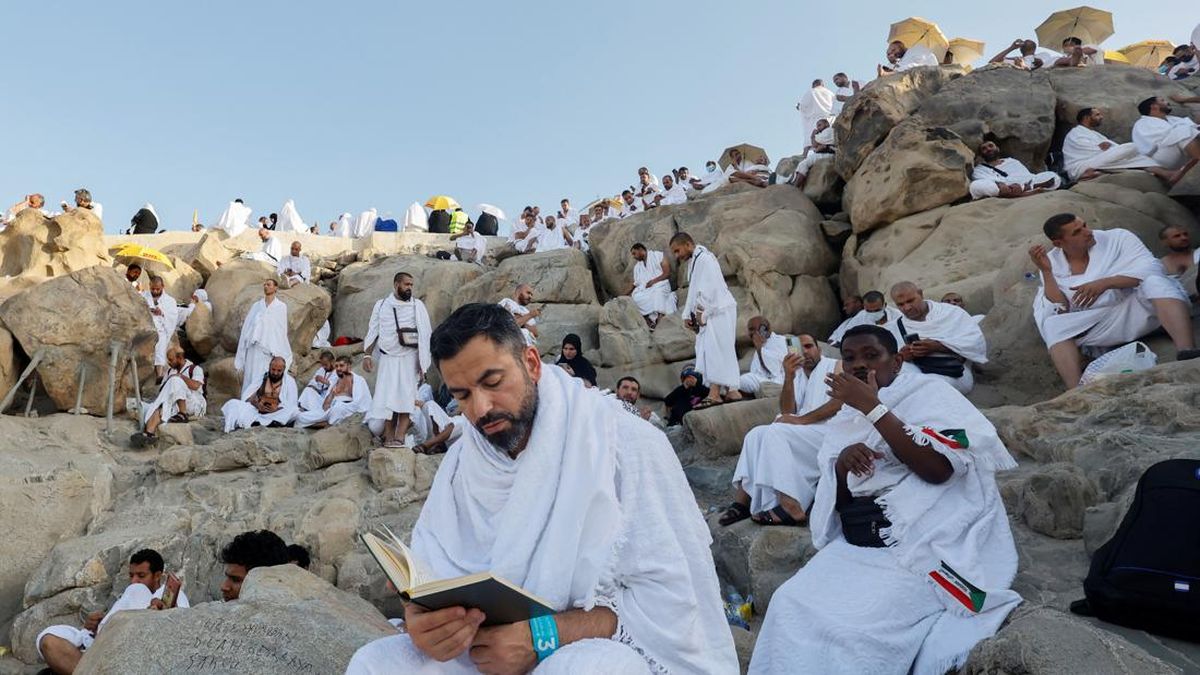
This is the most crucial day of Hajj. After sunrise, pilgrims travel from Mina to the plains of Arafat. Wuquf, standing in sincere prayer, supplication, and seeking forgiveness from noon until sunset, is the pinnacle of Hajj. Missing Wuquf at Arafat invalidates the Hajj.
After sunset at Arafat, pilgrims proceed to Muzdalifah, an open plain between Arafat and Mina. Here, they combine Maghrib and Isha prayers and spend the night under the open sky. Small pebbles (usually 49 or 70) are collected here for the Ramy ritual.
On the 10th of Dhul-Hijjah, pilgrims return to Mina from Muzdalifah. The first Ramy is performed by throwing seven pebbles at the largest pillar, Jamarat al-Aqabah, symbolizing Prophet Ibrahim's rejection of Satan. Following this, an animal sacrifice (Qurbani or Nahr) is performed, if obligatory for their type of Hajj (like Tamattu or Qiran).
After the sacrifice, men shave their heads (Halq) or trim their hair (Taqsir), while women trim a small portion of their hair. This marks a partial exit from the state of Ihram, allowing most restrictions to be lifted, except for marital relations.
Pilgrims then go to Mecca to perform Tawaf al-Ifadah, another essential circumambulation of the Kaaba, followed by Sa'i for Hajj (if not already performed with Tawaf al-Qudum in Hajj Ifrad or Qiran). After this Tawaf, all Ihram restrictions are lifted. Pilgrims then return to Mina.
Pilgrims spend these days in Mina, performing Ramy by stoning all three Jamarat (small, medium, and large) each day after noon, with seven pebbles for each.
Before leaving Mecca, pilgrims perform a final Tawaf al-Wada. This is the concluding rite of Hajj.
These comprehensive rituals are also undertaken in Umrah, albeit in a shorter form (Ihram, Tawaf, Sa'i, and Halq/Taqsir). For both Hajj Badal and Badal Umrah (or Proxy Umrah), the appointed individual meticulously follows these sacred steps, ensuring the integrity and spiritual validity of the pilgrimage performed on behalf of another.


.webp)


